|
|
The Weekly Brief
Issue #64 · October 8, 2026
|
|
— The Weekly Brief
Happy Thursday.
AI moved into the tools businesses already use this week. GPT-6 reached every ChatGPT user with answers that come back as charts and calculators, Anthropic made its everyday model about 75% cheaper to run, and Google introduced an agent that gets its own work email. Six in ten holiday shoppers plan to shop with AI this year, and the U.S. Chamber found two-thirds of small businesses already use it, with a median bill of $250 a month among those who pay. Here’s what happened.
|
|
In This Issue
| 01 |
GPT-6 reached every ChatGPT user, and answers now come with buttons, charts and calculators. Free accounts got it on October 8.
|
| 02 |
Anthropic released Claude Haiku 5.5 at 90% below the old price. Routine automations cost about 75% less to run.
|
| 03 |
Google introduced an AI agent that can get its own work email and calendar. Claude also moved into Google Docs, Sheets and Slides.
|
| 04 |
Six in ten holiday shoppers plan to use AI this year, up from 47%. Most will use it to compare prices and research before buying.
|
| 05 |
Two-thirds of small businesses now use AI. The median spend among those paying is $250 a month.
|
| + |
Our long read on Jev, the AI model that cannot write a sentence, plus 3 tools worth your time and how the Smithsonian is using AI to connect 10,000 objects from the American Revolution.
|
|
|
ChatGPT
ChatGPT’s Answers Now Come With Buttons, Charts and Calculators
OpenAI rolled GPT-6 out to every ChatGPT user this week, paid plans on October 7 and free accounts on October 8, along with a new way of answering it calls Intelligent UI.
Plus, Pro, Business and Enterprise users get GPT-6 Sol, and Free and Go users get GPT-6 Luna. The bigger change is the shape of the answer. The model now decides how each response should look and can build interactive charts, maps, checklists, forms or a small working tool, such as a savings calculator or a bill splitter, right in the chat. Plain text is still there when it fits best, and the visuals can be turned down in settings. GPT-6 also starts replying while it is still thinking, and OpenAI says answers that need a web search now begin 44% sooner on average than with the model it replaces. Comparing three suppliers or working out a payment schedule now comes back as something to click and adjust, not a page to read.
Source: MacRumors →
|
|
Models
The AI That Handles Routine Work Just Got About 75% Cheaper
On October 7, Anthropic released Claude Haiku 5.5, its small, fast model, priced 90% below the version it replaces for most requests.
Haiku is the model businesses typically put on high-volume, repetitive jobs: sorting email, filling in forms, summarizing calls and answering routine support questions. Haiku 5.5 costs $0.10 per million input tokens and $0.50 per million output, against $1 and $5 for Haiku 4.5. It counts text slightly differently, so Anthropic puts the real saving at around 75% for a typical job. It also does far more. On a test of real computer tasks it completed 72.4%, against 15.7% for Haiku 4.5 and 48.9% for OpenAI’s GPT-6 Luna, which sells at the same price. HubSpot says it posted the best score it has seen on its own CRM test suite, and Box says it scored 11 points higher than the previous Haiku at about half the wait. Work already running on the old Haiku now costs roughly a quarter as much.
Source: Anthropic →
|
|
Agents
Google’s New AI Coworker Gets Its Own Email Address
On October 8, Google Cloud introduced the Gemini agent: give it an outcome instead of step-by-step instructions, and it plans the work and comes back with the finished job.
It works inside Gmail, Docs, Sheets, Calendar and Drive, and work that takes hours or days keeps running after the laptop closes. Asked to set up a meeting with “the usual team,” it works out who that is from past threads, checks calendars and starts the email. A business can also describe a role and get a coworker agent with its own email address, calendar and Drive, which sees only what the team shares with it. Google says small and midsize businesses’ use of its cloud AI tools has grown more than fivefold in a year. It has not said when the agent reaches customers or what it will cost. Two days earlier, Anthropic put Claude inside Google Docs, Sheets and Slides for every paid Claude plan. The next account a Workspace admin sets up may be for an agent.
Source: Google Cloud →
|
|
Retail
Six in Ten Holiday Shoppers Plan to Use AI This Year
A survey of 1,003 US adults published October 6 by ICSC, the shopping-center industry group, found 61% plan to use AI tools or assistants for their holiday shopping, up from 47% last year.
Most will use it before they buy: 29% to compare prices, 19% to research products and features, 18% to check whether something is in stock and 16% to find deals. Overall, 86% plan to do more research before making a purchase. Shoppers are also open to new names this year, with 58% expecting to try a brand they haven’t bought before and 52% planning to shop at a retailer they haven’t used. Stores still count: 93% expect to visit one to buy something or pick up an online order. ICSC forecasts holiday retail sales up 4.3% to 4.9%, to more than $1.7 trillion. The comparing that used to happen across a dozen browser tabs now happens in one conversation, and an assistant can only recommend the store whose prices and stock it can actually read.
Source: ICSC →
|
|
Small Business
Two-Thirds of Small Businesses Now Use AI. The Median Bill Is $250 a Month.
The U.S. Chamber of Commerce’s annual small-business technology report, published October 2, found 66% of small businesses now use AI, up from 58% last year and 23% in 2023.
Teneo Research surveyed 3,732 firms with fewer than 250 employees this summer. AI users were at least 7 points more likely than non-users to report growth in sales, profit and staff, and 47% of owners say AI is creating jobs at their business today, against 6% who say it is letting them cut headcount. Cost has not been the obstacle: 41% use free AI tools, and among businesses that pay, the median monthly spend is $250. Already 24% use an AI agent that automates processes, and 34% plan to. Most owners, 51%, believe their competitors already use AI or will within the year, and 73% say that pushed them to move faster. With a median bill of $250 a month, the harder decision for most owners is where to put AI to work.
Source: U.S. Chamber of Commerce →
|
|
|
|
|
|
The Long Read
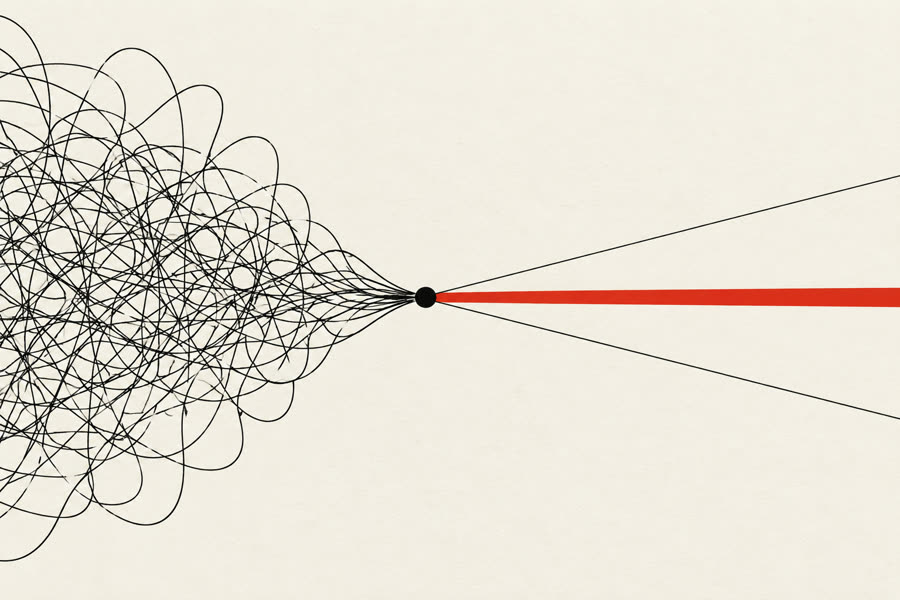
The AI Model Investors Want to Value at $10 Billion Cannot Write a Sentence. Sorting a Million Emails Costs It About $21.
Most AI answers in paragraphs. Jev, released by the startup TypeSafe AI in September, answers by picking from a list of allowed options and attaching an honest confidence score. It reads a support email and says which team it belongs to, flags an invoice that looks off, or ranks a hundred search results, in under half a second, and sorting a million emails costs about $21. The piece covers how it works, why a model that only picks from a list can do almost anything (including play the video game Doom), and what is still unproven. It pairs with the Haiku story above.
|
|
|
|
|
|
Pipedrive Nova
Included on every plan, from $14/seat/mo
New in Pipedrive, the sales CRM: an assistant that handles the prep and the paperwork around a sales call. Before the meeting it pulls together the deal history, emails and past conversations. It records the call through a visible notetaker in Zoom, Google Meet or Teams, with consent settings the team controls, then writes the transcript, summary and next steps and suggests updates to the deal’s stage, value and close date. Nothing changes in the CRM until the rep approves it. It is included on every plan, from $14 per seat a month billed annually. A pilot customer’s six-person sales team says it saves between 30 minutes and an hour per meeting.
|
|
|
Jotform Sign for ChatGPT and Claude
Free for 10 signed docs/mo, paid from $34/mo
Just launched: Jotform’s e-signature tool now works inside ChatGPT and Claude. Describe the document, such as an NDA for a new contractor, or upload an existing PDF or Word file, and it builds a signable version in the chat. Edit it by asking, set who signs and in what order, add anyone who needs a copy, then send it. Signers get it by email, everyone receives the completed copy, and the status can be checked from the same conversation. Connect it under Plugins in ChatGPT, or Customize, then Connectors, in Claude. The free plan covers 10 signed documents a month; paid plans start at $34 a month billed annually. The offer letter, the NDA and the consent form now start as a sentence.
|
|
|
Joist Estimate and Invoice with AI
14-day free trial, from $10/mo
For contractors who quote from the truck. Joist, the estimating and invoicing app for the trades, now builds an estimate or invoice from a typed or spoken description of the job. Name the services and materials with quantities and rates, and it turns each into a line item, totals them and attaches the client’s details if they are already a contact. Taxes, discounts and deposits are still added by hand, and there is always a draft to check before anything goes out. It is on every Joist plan, rolling out on iOS and the web: Basics is $10 a month for five documents, and Pro is $17 for unlimited. The quote can go out before the truck leaves the driveway.
|
|
|
|
|
The Smithsonian Is Using AI to Connect 10,000 Objects From the American Revolution
On October 3, the Associated Press reported on Revolution Crossroads, a Smithsonian project that uses AI to link objects across its 21 museums and galleries with records held elsewhere, such as the Library of Congress. Since researchers started this spring, the team has identified about 10,000 objects tied to people who lived between 1770 and 1810. One link connects a silversmith who advertised a cream jug in newspapers around 1774 with a similar creamer now at the National Museum of American History. Some objects had to be digitized again before the AI could read them, and trained historians review the results, catching things a machine misses, like whether a name is a nickname. The records are searchable by anyone. “An ideal scenario is that we get to a place where we’re actually adding to the public record,” said Becky Kobberod, who leads the effort. Two and a half centuries later, a small business owner’s newspaper ad is still doing its job.
Read it →
|
|
|
Know someone who’d find this useful? Forward this email.
Or send them this link to subscribe.
Get The Weekly Brief in your inbox →
|
|
See what AI automation actually looks like in practice.
View Case Studies
|
|
syneticai.com
•
Case Studies
•
Past Issues
|
|